
Jul 15, 2024 • 18 min readWhat is a Credential Stuffing Attack?Any business that has a sign-in page can become a victim of a credential stuffing attack. Read this article to find out how to protect yourself from it!
Account takeover attacks follow recognizable patterns that enable early detection. The most reliable warning signs include unusual login activity from unfamiliar locations, spikes in failed authentication attempts, device and browser anomalies, sudden changes in user behavior, social engineering attempts, suspicious transactions, and technical infrastructure signals like proxy or datacenter traffic. This article breaks down each of these seven indicators and explains how real-time monitoring detects coordinated account takeover activity before accounts are compromised.
Account Takeover represents one of the most damaging forms of fraud affecting businesses across all digital industries. When cybercriminals gain unauthorized access to legitimate user accounts, they can cause immediate financial harm, compromise sensitive data, and inflict long-term brand reputation damage. Recognizing the early warning signs of Account Takeover attempts enables organizations to protect their platforms through proactive detection and timely response.
Modern Account Takeover schemes often combine social engineering, credential-based attacks, and automated tooling to breach account security. These multi-vector approaches significantly increase detection complexity, but organizations can defend effectively by implementing continuous monitoring systems that analyze behavioral signals and technical indicators across all user interactions, forming the foundation of reliable account takeover detection.
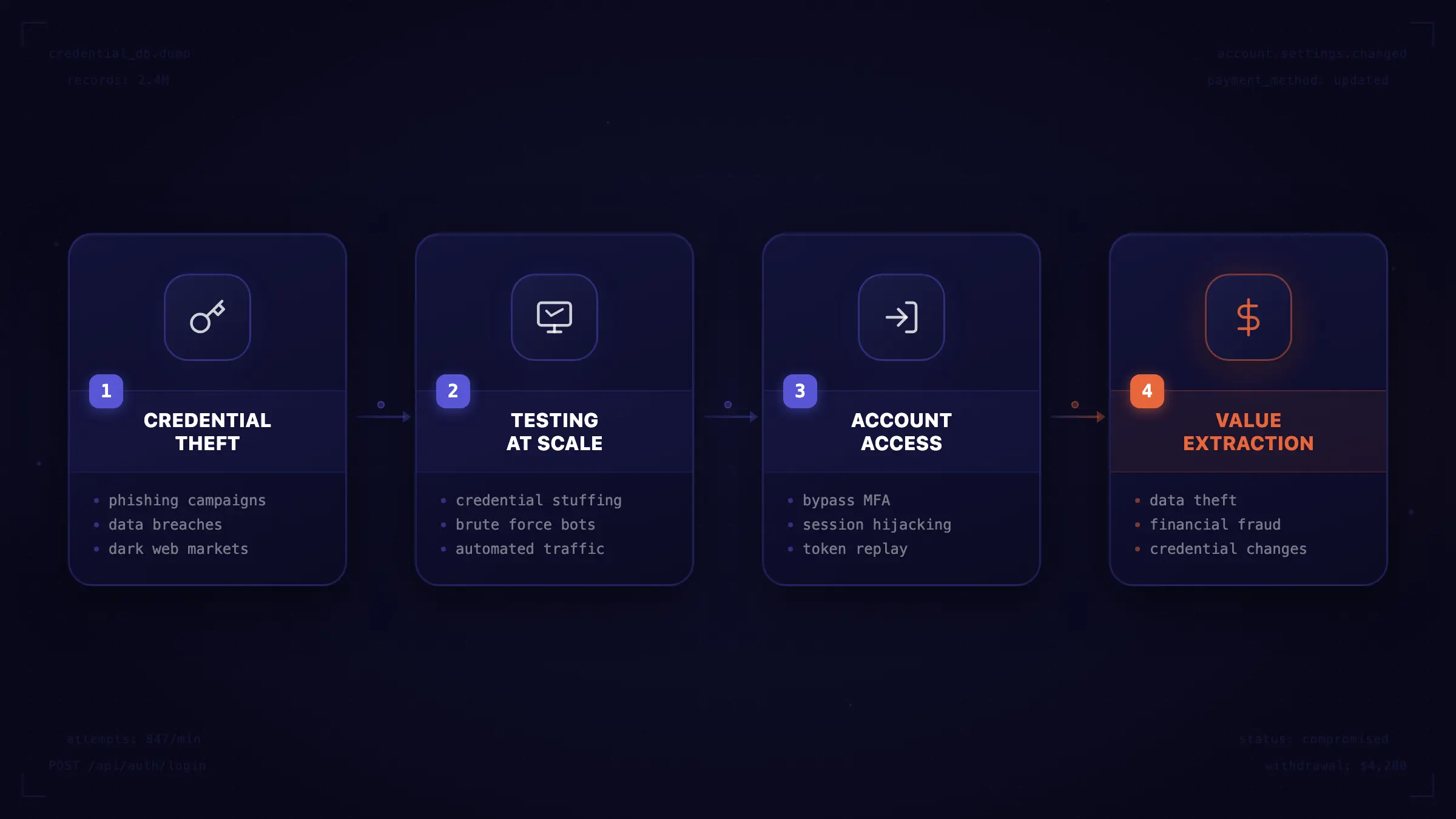
Account Takeover occurs when attackers gain unauthorized access to legitimate user accounts through methods such as credential theft, phishing, session hijacking, or automated password attacks. Once inside an account, fraudsters can access personal information, financial resources, loyalty rewards, and exploit promotions intended for genuine users. The impact includes direct financial loss, erosion of customer trust, and potential regulatory compliance issues.
The sophistication of modern takeover attempts has increased substantially. Attackers frequently leverage automated bot traffic to test stolen credentials at scale across multiple platforms. These attacks target weak passwords, reused credentials, and accounts not protected by multi-factor authentication. Professional fraud groups often maintain large databases of compromised login details sourced from previous data breaches, enabling coordinated and high-volume takeover campaigns.
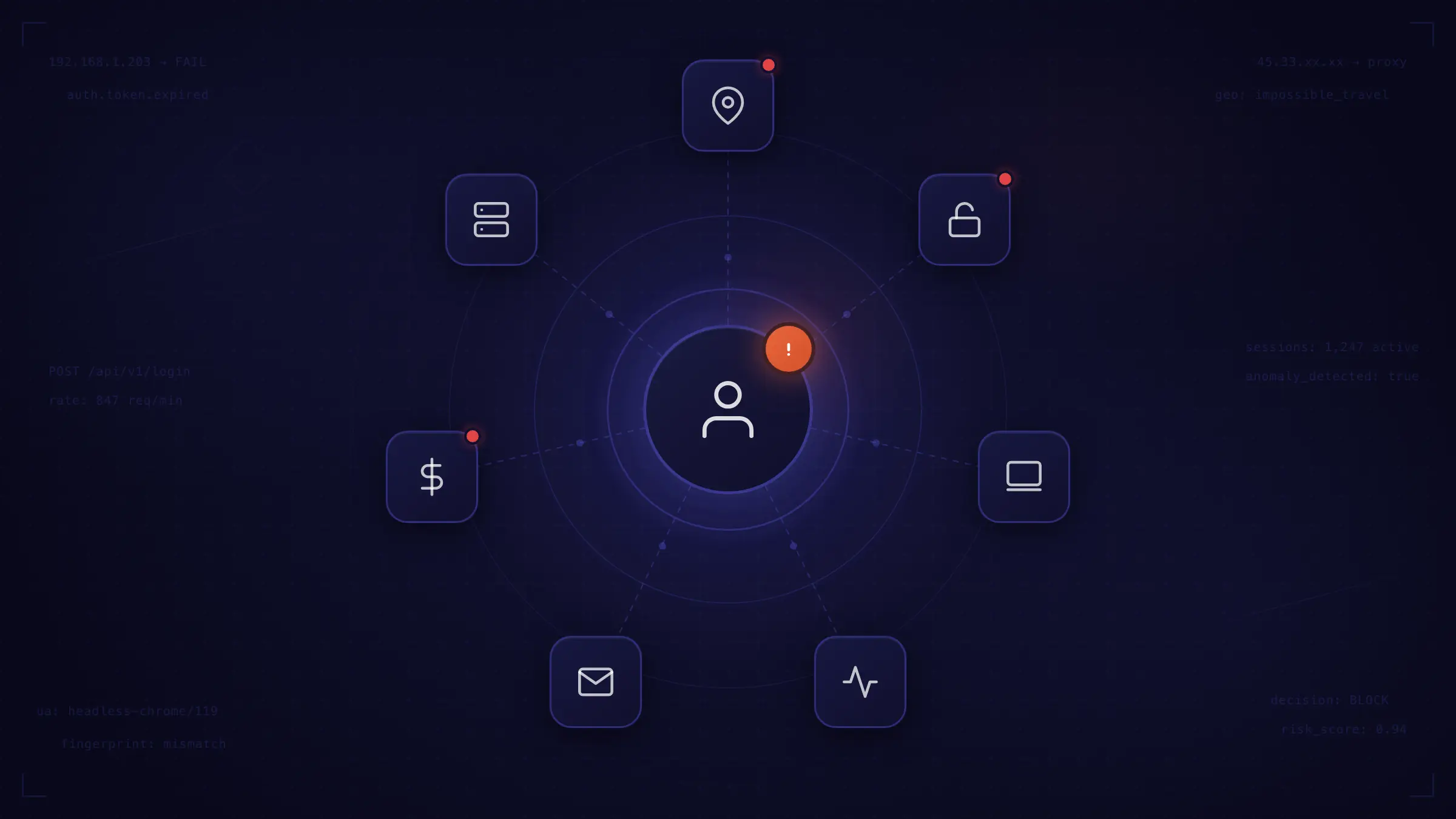
Detecting account takeover activity requires monitoring multiple signal layers simultaneously. Authentication patterns, device fingerprints, behavioral analytics, and network-level indicators each capture different attacker techniques, and cross-referencing signals across layers significantly improves detection accuracy.
Legitimate users typically develop consistent login habits based on geography, device type, and time of day. Sudden deviations from these patterns are strong indicators of potential compromise. Account Takeover attempts often originate from unfamiliar locations, unusual time zones, or devices that differ significantly from the user’s historical behavior.
Monitoring systems should capture login frequency, device usage, and session timing to build baseline behavioral profiles. When an account begins exhibiting atypical patterns—such as simultaneous logins from different countries or access during abnormal hours—it warrants immediate investigation. Real-time detection systems can identify these anomalies and trigger automated protective actions.
A surge in failed login attempts often precedes successful Account Takeover incidents, especially when attackers employ brute-force or credential-stuffing strategies. These attacks systematically test passwords using leaked credential lists or automated guessing tools. Monitoring failed authentication patterns enables early identification of accounts under attack.
Bot detection systems can distinguish between legitimate users who simply forgot their passwords and automated tools performing large-scale credential testing. Timing consistency, attempt frequency, and distributed IP patterns all reveal malicious intent.
Key patterns indicating malicious login attempts include:
Sophisticated attackers may distribute attempts across multiple IPs or proxies to avoid rate-limiting, but behavioral timing patterns often remain machine-like. Correlating failed attempts across multiple accounts helps detect coordinated campaigns.
Account Takeover attempts frequently originate from devices or browsers that differ from the user’s known profile. Attackers may use virtual machines, emulators, or compromised devices with unusual technical signatures. Device fingerprinting can identify these anomalies by analyzing browser characteristics, hardware details, and configuration patterns.
Although some browser extensions or scripts can obscure device attributes, comprehensive fingerprinting solutions detect inconsistencies. Sudden access from devices with impossible hardware combinations, mismatched browser profiles, or known malicious signatures indicates a high takeover risk. Device reputation systems help flag suspicious or previously compromised environments.
Legitimate users exhibit stable behavioral patterns and signals across navigation, feature usage, and transaction flow. Account Takeover events cause noticeable behavioral shifts as attackers focus on objectives such as data extraction, credential changes, or financial actions rather than typical user activity.
Behavioral analysis systems track page flows, interaction timing, and engagement patterns. Sudden mechanical interaction, skipping standard navigation paths, or targeting high-risk account sections immediately after login often signals unauthorized access.
Common behavioral anomalies include:
These shifts are particularly suspicious when occurring on first access from a new device or location.
Social engineering attacks frequently precede Account Takeover attempts, as attackers gather the information needed to bypass authentication. This may include phishing emails, fake customer support outreach, or social media manipulation designed to extract credentials.
Warning signs include recent password reset requests, unusual customer support interactions, or user reports about suspicious communications claiming to represent the company. Sudden changes to contact information or security settings may indicate that a user fell victim to social engineering.
Common social engineering methods include:
Attackers often create urgency to push users into bypassing standard security practices.
After gaining access, fraudsters typically act quickly to extract value from compromised accounts. This may include unauthorized transactions, promotion exploitation, or rapid modification of critical account settings.
Suspicious activity patterns include:
Real-time transaction monitoring helps detect and block these actions before financial loss occurs.
Professional takeover operations rely on specific technical infrastructure that leaves identifiable traces. These include proxy networks, VPNs, automation tools, and data-center traffic patterns that differ from normal user access.
Technical indicators include:
Network-level analysis and bot detection help differentiate legitimate traffic from automated attacks.
Coordinated account takeover campaigns target multiple accounts simultaneously using shared infrastructure, automated tooling, and stolen credential databases. Unlike isolated incidents, coordinated attacks produce correlated signals across accounts that are detectable through cross-account analysis. The following table summarizes the key indicators organized by signal category.
| Signal Category | Indicator | What to Look For | Severity |
|---|---|---|---|
| Authentication | Distributed credential testing | Failed login spikes across multiple accounts from rotating IPs | critical |
| Authentication | Credential stuffing patterns | Known breached email/password combinations tested at scale | critical |
| Behavioral | Uniform post-login actions | Multiple accounts navigating identical paths immediately after access | high |
| Behavioral | Mechanical interaction timing | Consistent click intervals and form completion speeds across sessions | high |
| Device & Browser | Shared device fingerprints | Multiple accounts accessed from devices with identical or impossible hardware profiles | critical |
| Device & Browser | Emulator or VM artifacts | Browser configurations that indicate virtual environments or automation frameworks | high |
| Network & Infrastructure | Datacenter IP concentration | Login attempts originating from cloud hosting or datacenter IP ranges | high |
| Network & Infrastructure | Proxy and VPN rotation | Systematic cycling through proxy services to avoid rate limiting | high |
| Social Engineering | Coordinated phishing waves | Multiple users reporting similar suspicious communications within a short timeframe | medium |
| Transaction | Rapid value extraction | Simultaneous changes to payment methods or fund withdrawals across accounts | critical |
These indicators are most effective when analyzed collectively rather than in isolation. A single failed login attempt is routine, but hundreds of failed attempts using breached credentials across accounts sharing datacenter IP addresses represent a coordinated campaign. Real-time correlation of behavioral, technical, and authentication signals enables detection of these campaigns before accounts are compromised.
Beyond the primary indicators, supplementary warning signs help identify emerging or sophisticated takeover attempts:
These indicators often appear in clusters and should be evaluated collectively to improve detection accuracy.
The impact of successful Account Takeover extends far beyond direct financial loss. Consequences may include regulatory violations, data exposure, operational disruption, and significant damage to brand reputation. Understanding these risks helps justify investment in preventive controls.
Data exfiltration during Account Takeover incidents may expose sensitive customer information, payment details, or confidential platform data, potentially triggering regulatory reporting requirements. Strong security controls reduce these risks and help preserve customer trust.
Effective Account Takeover prevention requires a layered security model addressing multiple attack vectors while preserving user experience. Strategies include:
Organizations should also implement strong account recovery procedures to minimize damage following a compromise. Regular security assessments ensure that defenses remain effective as attack techniques evolve.
The BotBye platform delivers comprehensive Account Takeover detection and prevention capabilities designed to protect businesses from sophisticated fraud attempts. Our systems analyze behavioral patterns, device attributes, and technical indicators in real time to identify takeover attempts before they cause harm. Request a demonstration to see how our technology strengthens account security while maintaining a seamless user experience.
Account takeover detection depends on recognizing these warning signs early and correlating them across multiple signal layers. Organizations that monitor authentication patterns, device fingerprints, behavioral anomalies, and infrastructure indicators in real time can identify coordinated attacks before accounts are compromised.